

What We Offer
Design-Build Construction
One contract, one team, one point of accountability. Design-build removes the gap between the people who draw the building and the people who put it up, which is where most cost and most delay actually live.
Design and construction under a single contractual entity, not two competing ones.
Licensed across North Carolina, South Carolina, Virginia, Tennessee and Georgia.
Family-owned commercial general contractor and design-builder founded by Travis Hayes.
What changes when there is only one contract
In the traditional model an owner holds two agreements and sits between them. When the drawings and the field disagree, the owner arbitrates. Design-build collapses that into one agreement, which changes three things immediately.
- Cost gets decided while it can still be changed. A builder in the room during design can price a decision the week it is made rather than the month after the set is issued. That is the difference between an alternate and a change order.
- Nobody is between the owner and the answer. One entity is responsible for the building performing as intended, so questions about who owns a problem do not become a negotiation.
- The schedule overlaps instead of queueing. Long-lead procurement, permitting and site work can start against a design that is still developing, rather than waiting for a complete set.
What Hayco handles under a design-build contract
The scope below is what the single contract covers. The owner holds one agreement and one schedule.
Project and site evaluation
Assessment of the site, the building envelope and the constraints that will shape what is buildable before a design direction is fixed.
Design team selection
Hayco assembles and holds the design team, so architecture and engineering answer into the same contract as construction.
Budgeting
Cost modeling that runs alongside design development rather than after it, so decisions are priced while they are still reversible.
Scheduling
A single schedule covering design, permitting, procurement and construction, with the overlaps planned rather than discovered.
On-site staffing
Superintendent and field staffing assigned to the project, not shared across a region.
Delivery and turnover
Construction through commissioning and handover under the same agreement that started the design.
How a design-build project runs
Hayco publishes a nine-stage process. The stages below are grouped to show where the design-build structure changes the outcome rather than just the paperwork.
Understanding requirements
What the building has to do, who occupies it, and what the operation cannot tolerate. This is the conversation that determines whether the rest of the project is efficient or expensive.
Site options and evaluations
Assessment of candidate sites or the existing building against the requirement, including the constraints that are cheaper to discover now.
Planning, zoning, utilities and traffic
The approvals and infrastructure questions that decide feasibility. Getting these wrong late is the single most expensive failure mode in commercial construction.
Design development
Design progresses with the builder pricing alongside it, so the budget and the drawings move together instead of meeting at bid day.
Permitting and approvals
Submissions handled against the schedule, with review cycles built in rather than assumed away.
Construction and commissioning
Field execution under the same contract, with systems commissioned as the building completes rather than after.
Certificate of occupancy and owner occupancy
Turnover documented and sequenced so the owner can actually take possession and operate on the date they planned around.
When design-build is the right structure
It is not the right answer for every project, and saying so is cheaper for everyone than discovering it in month four.
Choose design-build when
- You have a need, a site and a budget, but not yet a drawing set.
- Speed matters and design, permitting and procurement need to overlap.
- The building has systems that are expensive to get wrong, so pricing them during design is worth more than bidding them after.
- You would rather hold one agreement than arbitrate between two.
- The scope is likely to evolve and you want that priced as it happens.
Choose something else when
- Your design is already complete and permitted. That is a general construction project.
- A public procurement rule requires a hard bid against a finished set.
- Your own architect is already engaged and holding the design contract.
- The scope is a straightforward interior fit-out with a fixed shell. That is usually a commercial upfit.
Recent Hayco projects
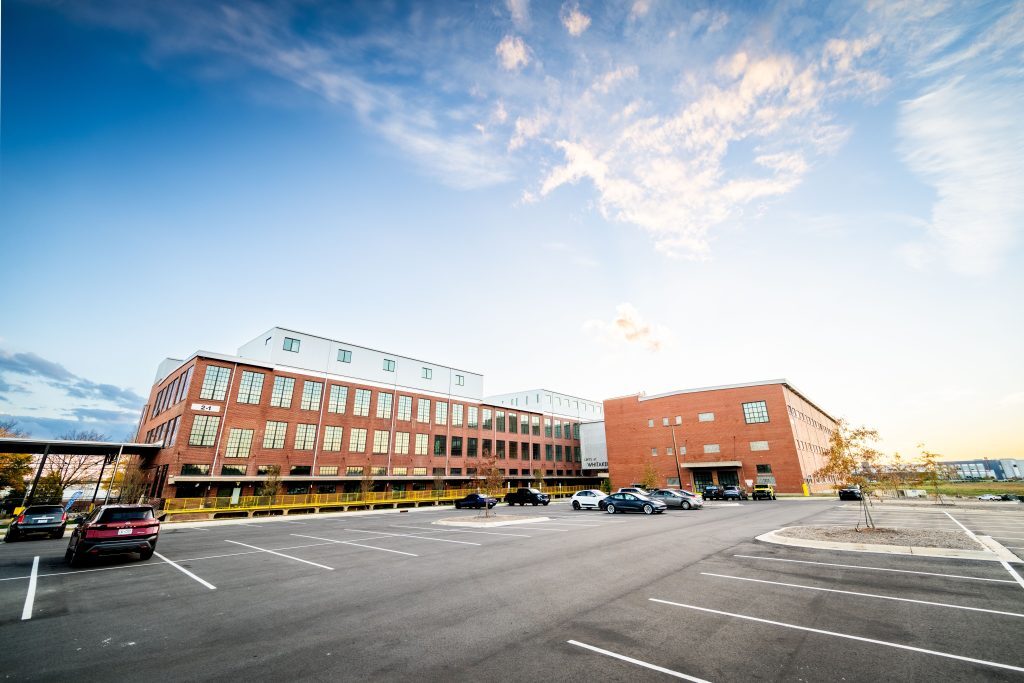
The Lofts at Whitaker Park
Winston-Salem, North Carolina
Mixed use development for Frye Properties. The largest project in the portfolio.
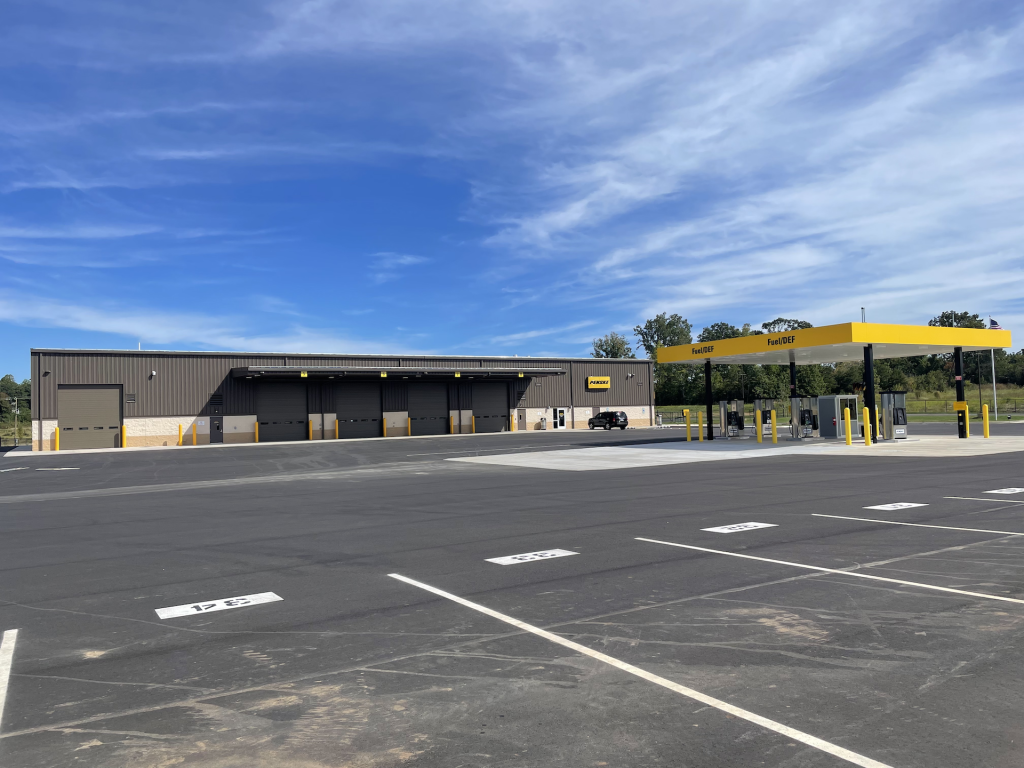
Penske
Greensboro, North Carolina
New build on a 15-acre site off Interstate 40: office, shop, truck wash bay and fuel island. LEED certified.
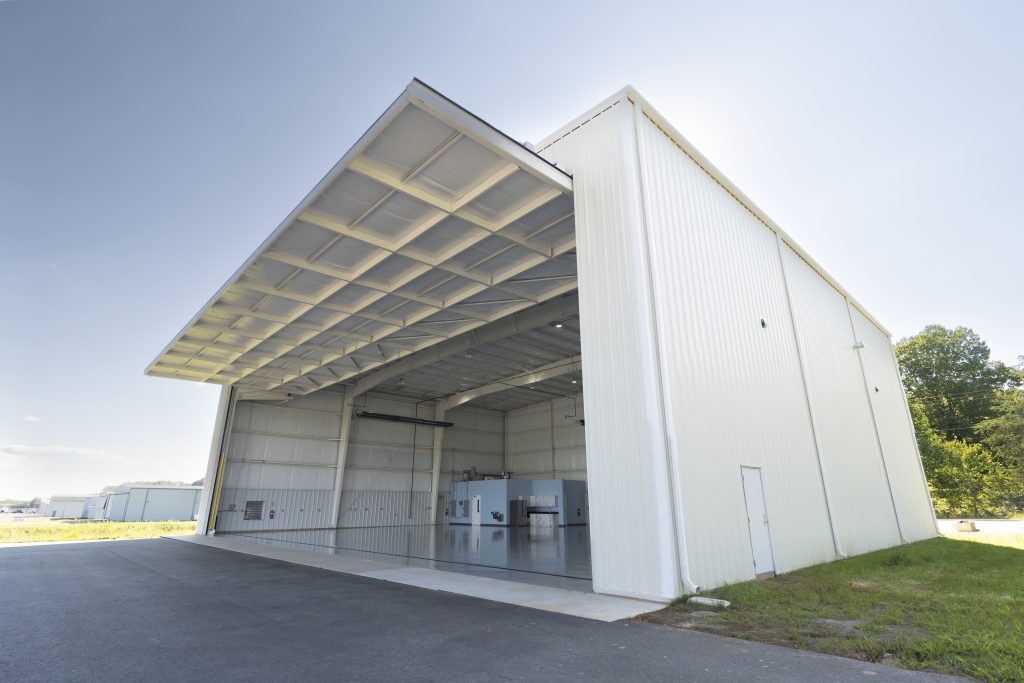
Surry County Aircraft Hangar
Mount Airy, North Carolina
New hangar with hydraulic door, epoxy flooring and infrared heat, plus a 600 sq ft office and lounge.
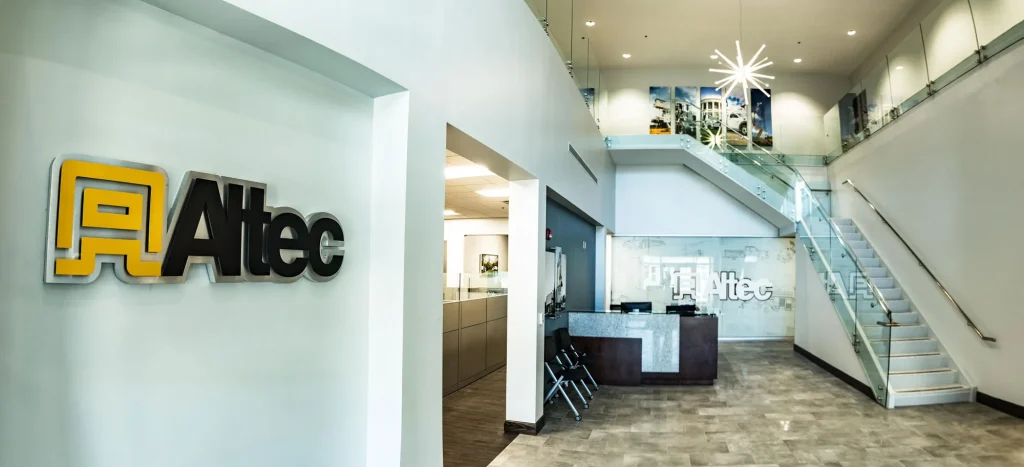
Altec
Mount Airy, North Carolina
Interior office renovation plus the addition of two new floors.
Swipe or use the arrows to see all 4 projects.Swipe to see all 4 projects.
These are recent ground-up and expansion projects from Hayco's portfolio. Ask us how any of these was contracted and we will walk you through it.
Where Hayco design-builds
Hayco is licensed across North Carolina, South Carolina, Virginia, Tennessee and Georgia, and staffs work from Pilot Mountain and Raleigh, North Carolina, and West Columbia, South Carolina. Build types are covered in depth on the healthcare, industrial and logistics, laboratory, institutional, retail and financial, aviation and mixed use pages.
Related delivery structures: general construction when the design is already complete, and commercial upfit when the shell is fixed. Preconstruction covers the work that happens before either. Design and engineering is the drawing and coordination side of the same contract, and commissioning and turn-over closes it out.
Common questions
What is the difference between design-build and general construction?
Design-build is a single contract covering both design and construction. General construction is Hayco building to a design someone else has already completed. If you do not have drawings yet, design-build is usually the faster and cheaper route.
Do you provide the architect and engineers?
Yes. Under design-build Hayco assembles and holds the design team, so architecture, engineering and construction all answer into the same agreement and the same schedule.
Does design-build cost less?
It removes a category of cost rather than discounting the work. Decisions get priced while they can still be changed, which is where change orders come from in the traditional model. Hayco also keeps overhead low and passes that through.
Can you design-build in states outside North Carolina?
Yes. Hayco holds licenses in North Carolina, South Carolina, Virginia, Tennessee and Georgia, and has delivered projects in North Carolina, South Carolina and Virginia to date.
Have a project but no drawings yet?
That is the point where design-build is worth the most. Tell us the building, the site and the date you need to occupy, and a preconstruction lead will follow up.
Request a quote